
2026
The Discourse Divide: The State of Debate & Speech on College Campuses
A national survey of 1,000+ U.S. college students reveals a generation eager to engage in debate but increasingly hesitant to speak, citing hostility, social consequences, and a lack of structure for meaningful dialogue.
See key findings here and download the full free report for complete insights.
By submitting this form, you agree to receive promotional messages from Banjo about its products and services. You can unsubscribe at any time by clicking on the link at the bottom of our emails.
A generation hungry for better discourse
The survey surfaces a clear and urgent paradox — students want more debate, but find the current experience broken.
76%
have experienced negative fallout from a disagreement
53%
say how people communicate today harms students' mental health
57%
hesitate to share opinions due to fear of reactions
The Paradox
Students want debate. They don't trust the one they're in.
92% of college students say they're interested in engaging in debate. 64% say today's debates feel more hostile than productive. The appetite is there, but the conditions aren't.
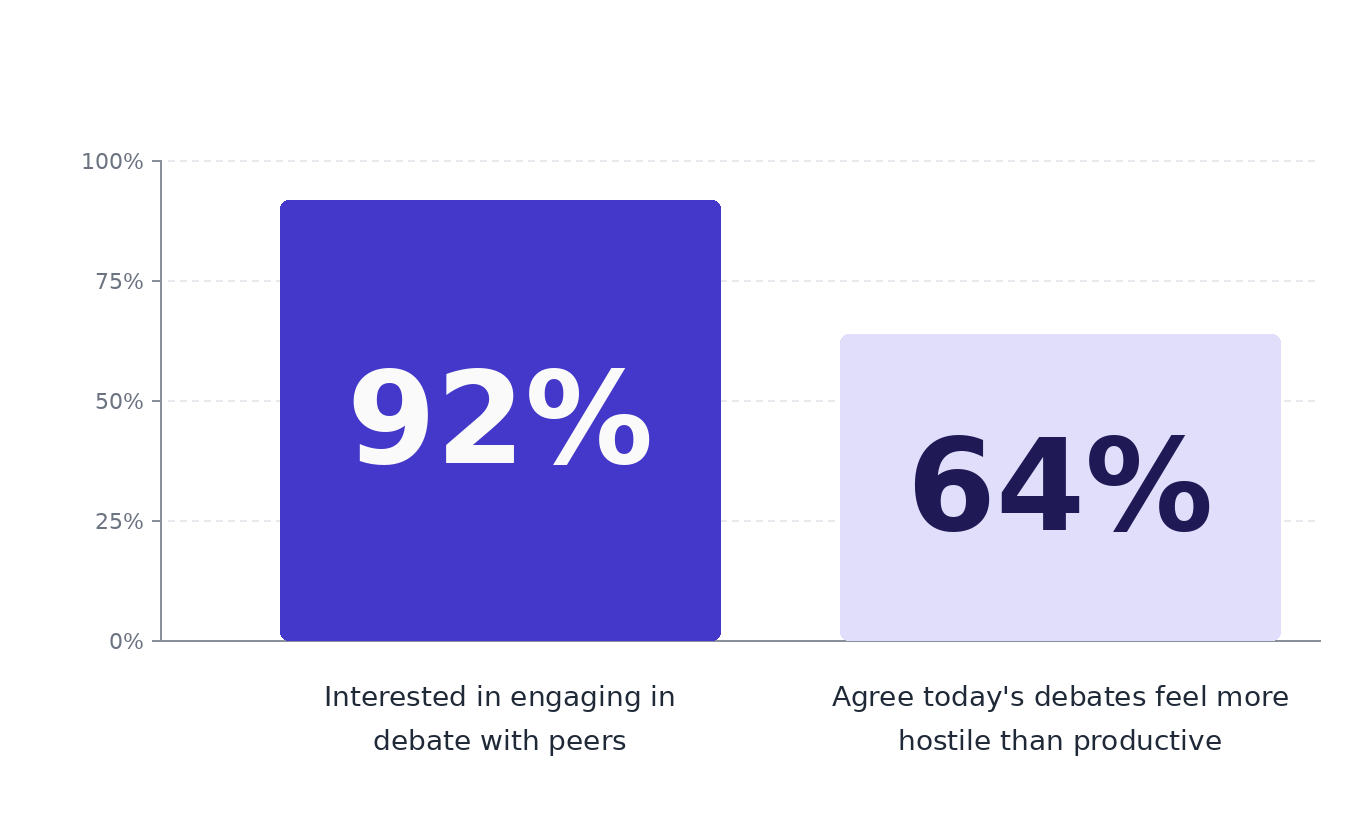
Students' interest in and feelings toward debate today
The Silence
More than half of students hold back — and the bigger the room, the quieter they get.
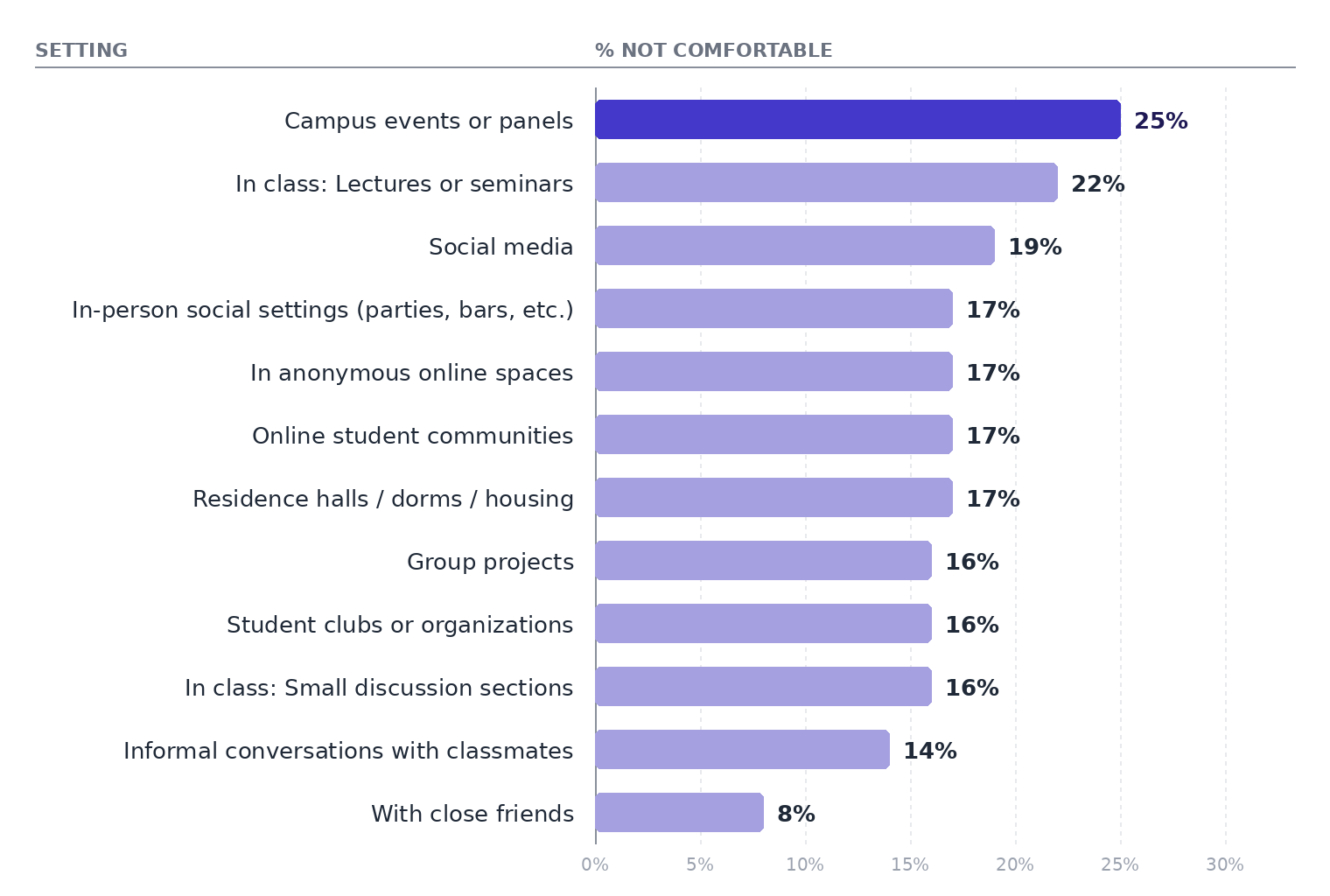
57% of college students hesitate to share opinions because of how others might react. And the more public or institutional the setting, the less comfortable students feel speaking honestly. Only with close friends does that hesitation fall away.
Percent of students uncomfortable expressing their opinions in campus settings
The Cost
Students have learned that speaking up has consequences.
76% of students have personally experienced or witnessed real fallout from a campus disagreement, including lost friendships, social isolation, public call-outs, and even physical fights. Many students now self-censor as an act of safety and peacekeeping.
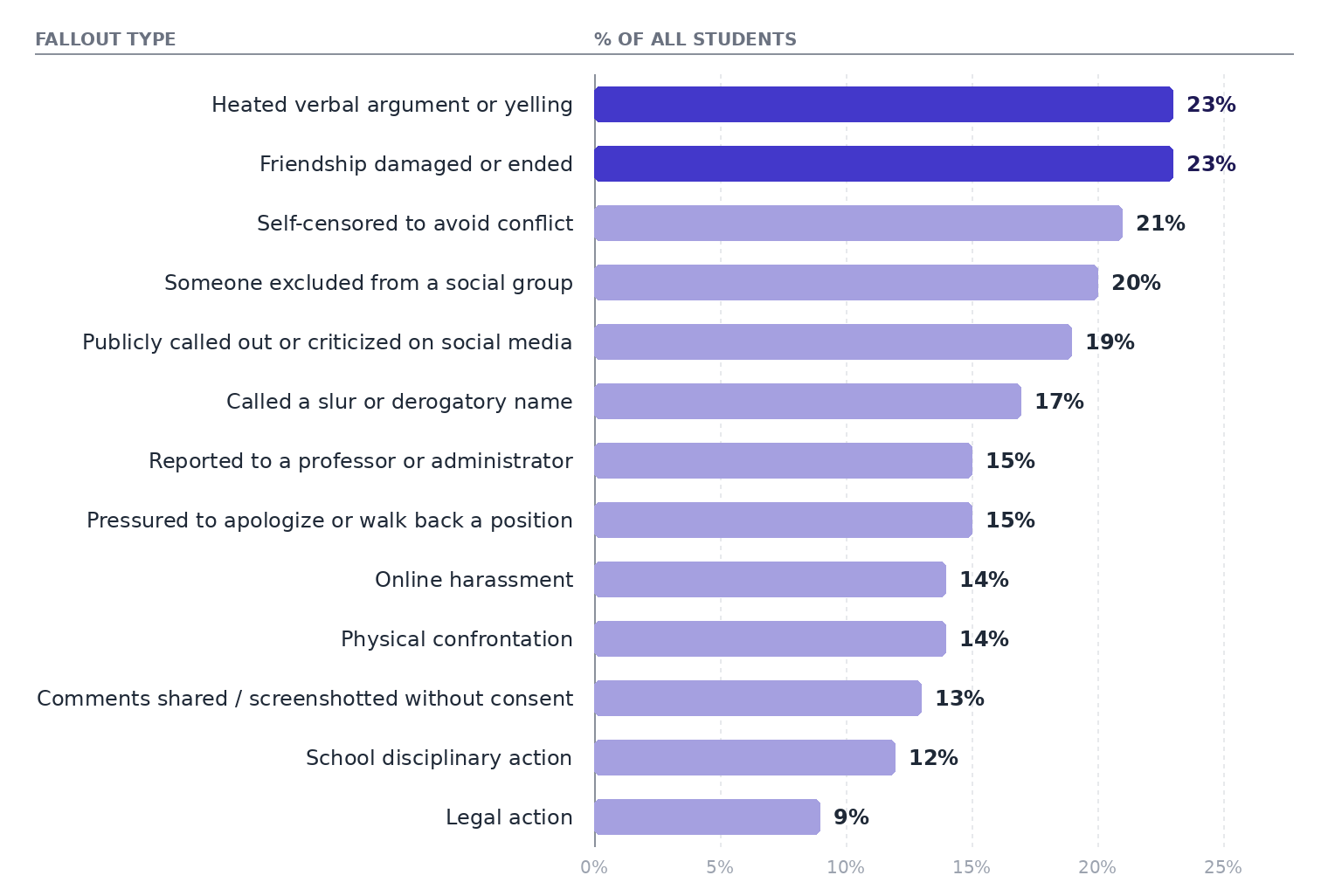
Types of fallout experience after engaging in disagreement or debate
76% of all students experienced at least one form of fallout; 24% reported none of the above
Inside the Full Report
A deeper look at the forces shaping student discourse
Dive into expanded findings, detailed analysis, and the specific conditions students say lead to more productive conversations.
01 — The Demand Gap
Most college students want more debate
70% of college students want to build debate skills. 56% say their school would be better with more opportunities for civil debate.
02 — The Issues
College students have strong opinions — and want to talk about them
The economy and cost of living make up the top issue among students today, followed closely by healthcare, and social justice, among others.
03 — The Echo Chamber
Students are most comfortable where they're least challenged
75% feel most comfortable speaking honestly with close friends — but 68% say those friends already share their views.
04 — Free Expression
Students want free speech guardrails
84% of students say free expression comes with social accountability. Only 11% endorse fully unrestricted speech.
05 — Mental Health & Democracy
The real-world cost of discourse that fails
More than half of students say the state of discourse affects their mental health — and 56% call it a threat to democracy.
06 — The Platform Signal
85% would use a tool built for structured debate
52% would use it often. See full data on platform appetite, anonymity preferences, and what features students want most.
Get the Full Data
Explore the full report
Access the complete analysis, including full data breakdowns, methodology, and additional student perspectives.
By submitting this form, you agree to receive promotional messages from Banjo about its products and services. You can unsubscribe at any time by clicking on the link at the bottom of our emails.
Methodology & Using the Data
Between April 3-11, 2026, Banjo surveyed 1,019 currently enrolled U.S. college students across 48 states and more than 600 institutions. Respondents were sourced and vetted through a third-party panel provider and reflect a mix of class years, majors, gender identities, races, religious affiliations, and political affiliations. The margin of error is ±3.1 percentage points at a 95% confidence level. More details in the full report.
We encourage you to explore, reference, and share the findings from The Discourse Divide, with attribution to Banjo and a link to this page. For media inquiries please contact info@banjo.media.
About Banjo
Banjo is a platform designed to help students engage in structured, respectful dialogue and debate. We combine thoughtful design, guided discussion formats, and responsible AI to enable more productive conversations, deeper understanding, and stronger critical thinking — on campus and beyond.
Our mission is to enhance consciousness, knowledge, and understanding in a moral, safe, and ethical way that benefits humanity, and to optimize learning for students and educators.